
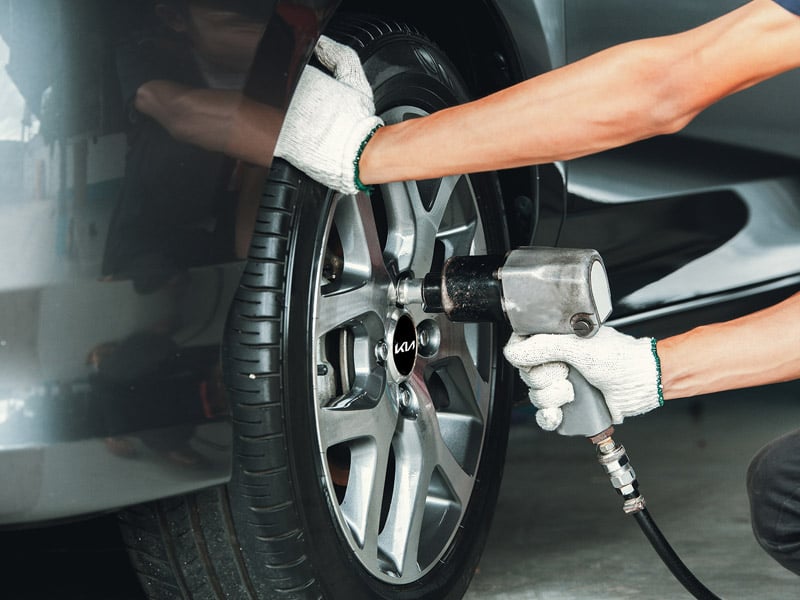
Kia Tire Service in Scarborough, ON
Your vehicle's tires provide the essential connection between your car and the road surface, making their condition critical for safety and performance. Properly maintained tires deliver the traction needed for confident acceleration, precise steering control, and effective braking in all weather conditions. Whether you drive a family SUV or fuel-efficient sedan, quality tires are essential for realizing your vehicle's full potential on the road. Our service centre provides complete tire services including inspections, rotations, balancing, and expert installation to keep your vehicle safe. We ensure your tires are properly maintained and suited to your driving needs for optimal performance.
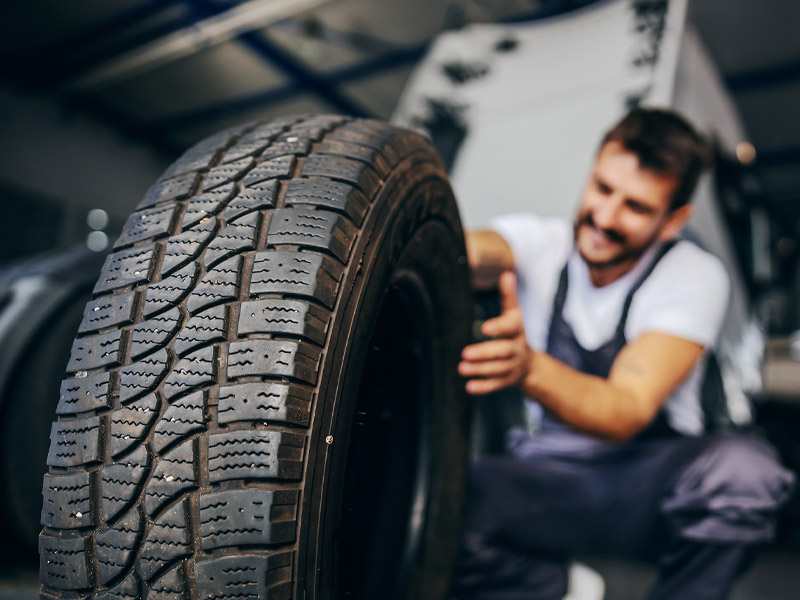
Maximizing Tire Life Through Comprehensive Care
Effective tire maintenance involves more than checking air pressure; it requires a proactive approach to preserve tire life and vehicle handling. Regular tire rotations promote even tread wear across all four tires, which is especially important for all-wheel-drive vehicles. Proper wheel balancing eliminates vibrations and ensures smooth operation at highway speeds, while correct alignment prevents premature wear patterns. Professional tire balancing and alignment services protect your investment and maintain stable, predictable handling characteristics your vehicle was designed to deliver. Consistent maintenance keeps your tires performing optimally throughout their service life.
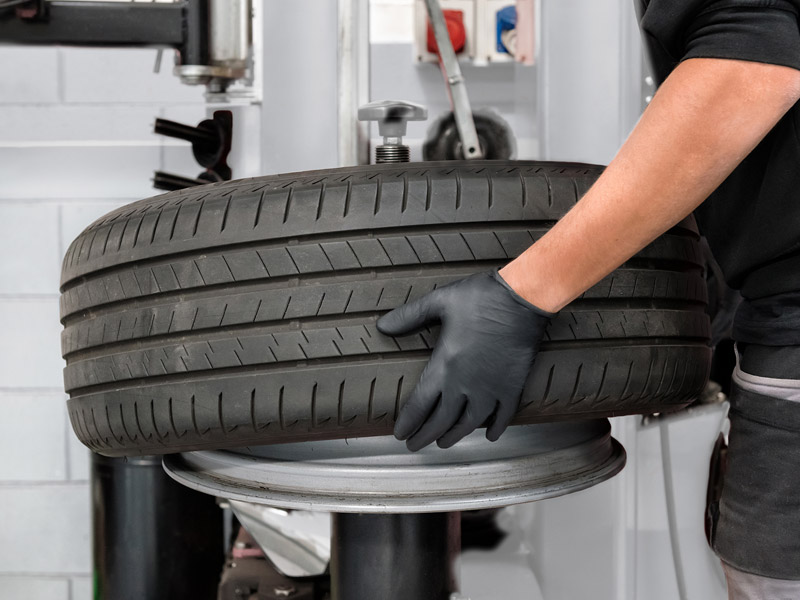
Identifying Common Signs of Tire Wear
Several warning signs indicate your tires may need professional attention or replacement to maintain safe driving conditions. Visual inspection can reveal uneven tread wear patterns that often point to alignment, balancing, or suspension problems requiring correction. Look for sidewall damage like cracks, bulges, or cuts that can lead to sudden tire failure and create dangerous driving situations. Persistent vibrations that increase with speed or reduced traction on wet roads are strong indicators of tire wear or damage. Any of these symptoms should prompt a professional tire inspection to determine the appropriate service needed for continued safe operation.
Kia Certified Service in Scarborough, Ontario
Quality tires are essential for safety, comfort, and fuel economy. Worn or damaged tires compromise your Kia's performance and safety. Scarboro Kia offers complete tire services, including mounting and balancing. We stock tires that exactly match your Kia's specifications. Proper tire maintenance extends tire life, improves gas mileage, and keeps you and your passengers safe. Don't risk safety with worn tires on busy roads. Visit Scarboro Kia at 2592 Eglinton Ave E, Scarborough, ON, or call (416)266-0066 today.
Kia Tire Service FAQS
How often should I rotate my tires?
Your tires should be rotated approximately every 10,000 to 12,000 kilometres for optimal longevity and even wear. This interval often aligns with your vehicle's scheduled oil change, making it convenient to have both services performed simultaneously. Regular rotations are especially crucial for all-wheel-drive vehicles to prevent unnecessary strain on the drivetrain.
Why is tire rotation important?
Tire rotation is important because it repositions your tires to ensure they wear down evenly over time. A vehicle's front tires typically wear faster than the rear ones due to the forces of steering, braking, and acceleration. Regularly rotating them extends the overall life of your tire set and helps maintain balanced, predictable handling characteristics.
How can I tell if my tires need repair or replacement?
You should regularly check your tires for visible signs of damage, such as bulges or cracks in the sidewall, and monitor your tread depth. Most tires have built-in wear indicator bars that become visible when the tread has worn down to the minimum safe limit. Your vehicle's tire pressure monitoring system will also alert you to any significant loss of air pressure.
Can tires be repaired?
A professional can safely and permanently repair a small puncture in the central tread area of a tire. However, any damage to the tire's shoulder or sidewall cannot be repaired, and the tire must be replaced to ensure safety. Industry standards typically dictate that any puncture larger than a quarter-inch diameter is considered unrepairable.
When should I replace my tires?
Tires should be replaced when the tread depth reaches the minimum legal limit or when they show significant signs of damage, like sidewall bulging or cracking. Replacing any tires over six to ten years old is also recommended, regardless of their tread depth, as the rubber compounds degrade over time. New tires are critical to your vehicle's safety and handling capabilities.
How do I know what tires my car needs?
Your vehicle's recommended tire specifications can be found on a placard on the driver's side door jamb or in your owner's manual. These specifications include the required size, load index, and speed rating for safe operation of your vehicle. A tire professional can also help you choose the best type of tire for your specific driving needs, such as all-season or winter tires.
What are the benefits of new tires?
New tires dramatically improve your vehicle's safety by providing superior traction, which results in shorter braking distances and better control on wet or slippery roads. They also contribute to a smoother, quieter ride and can improve fuel efficiency by reducing rolling resistance. This ensures that safety systems like anti-lock brakes and stability control can function as intended.
How long do new tires typically last?
The lifespan of new tires can vary widely, typically from 60,000 to 100,000 kilometres, depending on the tire quality, your driving habits, and vehicle type. Heavier vehicles like large SUVs may experience faster tire wear than smaller, lighter cars. Consistent maintenance, including regular rotations and maintaining proper inflation, is the best way to maximize their service life.
Your tires should be rotated approximately every 10,000 to 12,000 kilometres for optimal longevity and even wear. This interval often aligns with your vehicle's scheduled oil change, making it convenient to have both services performed simultaneously. Regular rotations are especially crucial for all-wheel-drive vehicles to prevent unnecessary strain on the drivetrain.
Tire rotation is important because it repositions your tires to ensure they wear down evenly over time. A vehicle's front tires typically wear faster than the rear ones due to the forces of steering, braking, and acceleration. Regularly rotating them extends the overall life of your tire set and helps maintain balanced, predictable handling characteristics.
You should regularly check your tires for visible signs of damage, such as bulges or cracks in the sidewall, and monitor your tread depth. Most tires have built-in wear indicator bars that become visible when the tread has worn down to the minimum safe limit. Your vehicle's tire pressure monitoring system will also alert you to any significant loss of air pressure.
A professional can safely and permanently repair a small puncture in the central tread area of a tire. However, any damage to the tire's shoulder or sidewall cannot be repaired, and the tire must be replaced to ensure safety. Industry standards typically dictate that any puncture larger than a quarter-inch diameter is considered unrepairable.
Tires should be replaced when the tread depth reaches the minimum legal limit or when they show significant signs of damage, like sidewall bulging or cracking. Replacing any tires over six to ten years old is also recommended, regardless of their tread depth, as the rubber compounds degrade over time. New tires are critical to your vehicle's safety and handling capabilities.
Your vehicle's recommended tire specifications can be found on a placard on the driver's side door jamb or in your owner's manual. These specifications include the required size, load index, and speed rating for safe operation of your vehicle. A tire professional can also help you choose the best type of tire for your specific driving needs, such as all-season or winter tires.
New tires dramatically improve your vehicle's safety by providing superior traction, which results in shorter braking distances and better control on wet or slippery roads. They also contribute to a smoother, quieter ride and can improve fuel efficiency by reducing rolling resistance. This ensures that safety systems like anti-lock brakes and stability control can function as intended.
The lifespan of new tires can vary widely, typically from 60,000 to 100,000 kilometres, depending on the tire quality, your driving habits, and vehicle type. Heavier vehicles like large SUVs may experience faster tire wear than smaller, lighter cars. Consistent maintenance, including regular rotations and maintaining proper inflation, is the best way to maximize their service life.